Welcome!

Thank you for visiting The Haley Hiatus, aka Travels with Barkley, where we're tracking our year-long 2010 travel adventure. We'll post pictures and journal entries as we travel the country by a wandering route from Pennsylvania to, ultimately, Alaska and back. If our trip captures your interest, please stop in occasionally to see what we're up to.

Clicking on a photo will make it larger and clearer. For most of the pictures, once the bigger picture comes up, clicking on it again will make it even larger.


Showing posts with label Seward. Show all posts

Saturday, August 7, 2010

Wasilla and Seward, Alaska Part 1

July 3d: Traveling and sightseeing can grow wearisome, so we decided to take a break for a few days to get our shopping and laundry chores done and simply relax. Lots of construction on Parks Road to Wasilla:


In Wasilla, we stayed on the circle in Big Bear RV Park and Campground. The inside of the circle was a common area with a large pavillion and three propane grills for the use of all patrons.


There was also a large grass area behind us where Bill and Barkley played and played. Because his back legs still aren't quite right, Barkley's body is at an angle to his goal when he runs.


Since it was the 4th of July weekend, we heard lots of fireworks, and a family in the RV park was also setting off fireworks. Broad daylight is not the ideal backdrop for fireworks, but we did see a faint color splash here and there.

July 6th, and we're back on the road to Seward. Sights at a stop along the Seward Highway on Turnagain Arm (a long inlet):


Harebells and clover:


A marsh along the way:


Of course, it was overcast and raining most of the day.


At another rest stop:


We stayed in Bear Creek RV Park outside of Seward and were once again blessed to be in the same park as Colin and Betty Linton. It was bittersweet, because they would be staying in Seward until the end of July, so we knew we wouldn't meet on the road again. We hope to see them again, and so does Barkley.


Signs along Resurrection Bay:


Two Park Service vehicles being charged:


The road south of Seward along the Bay, where we stopped to take pictures of sea otters:


A type of wild pea:


At the Kenai Peninsula Wildlife Viewing Trail, we picked up miniature booklets with color pictures of the invasive plants in the Seward area. The advice is to pull invasive weeds wherever they are found, pack them in plastic, and pack them out to proper trash receptacles.


Bald eagles:


Glacial streams running into Resurrection Bay:


Seward, Alaska Part 2

Still July 6th, we walked down the road from our RV park at 9 p.m. to see salmon coming up Bear Creek.


The weir on the other side of the road:


Barkley met two new friends at the weir.


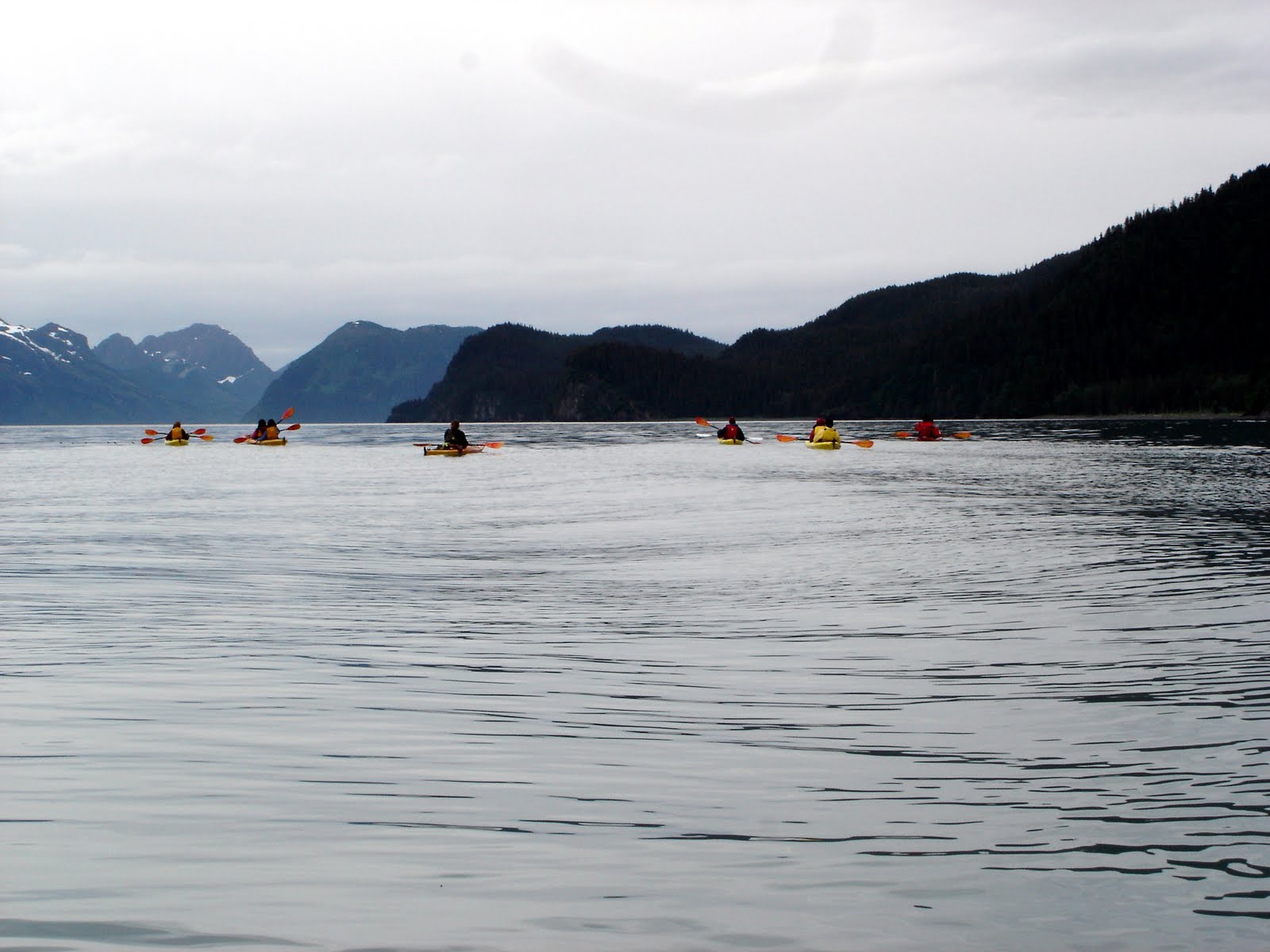
On July 7th, Bill took a sea kayak out in Resurrection Bay.


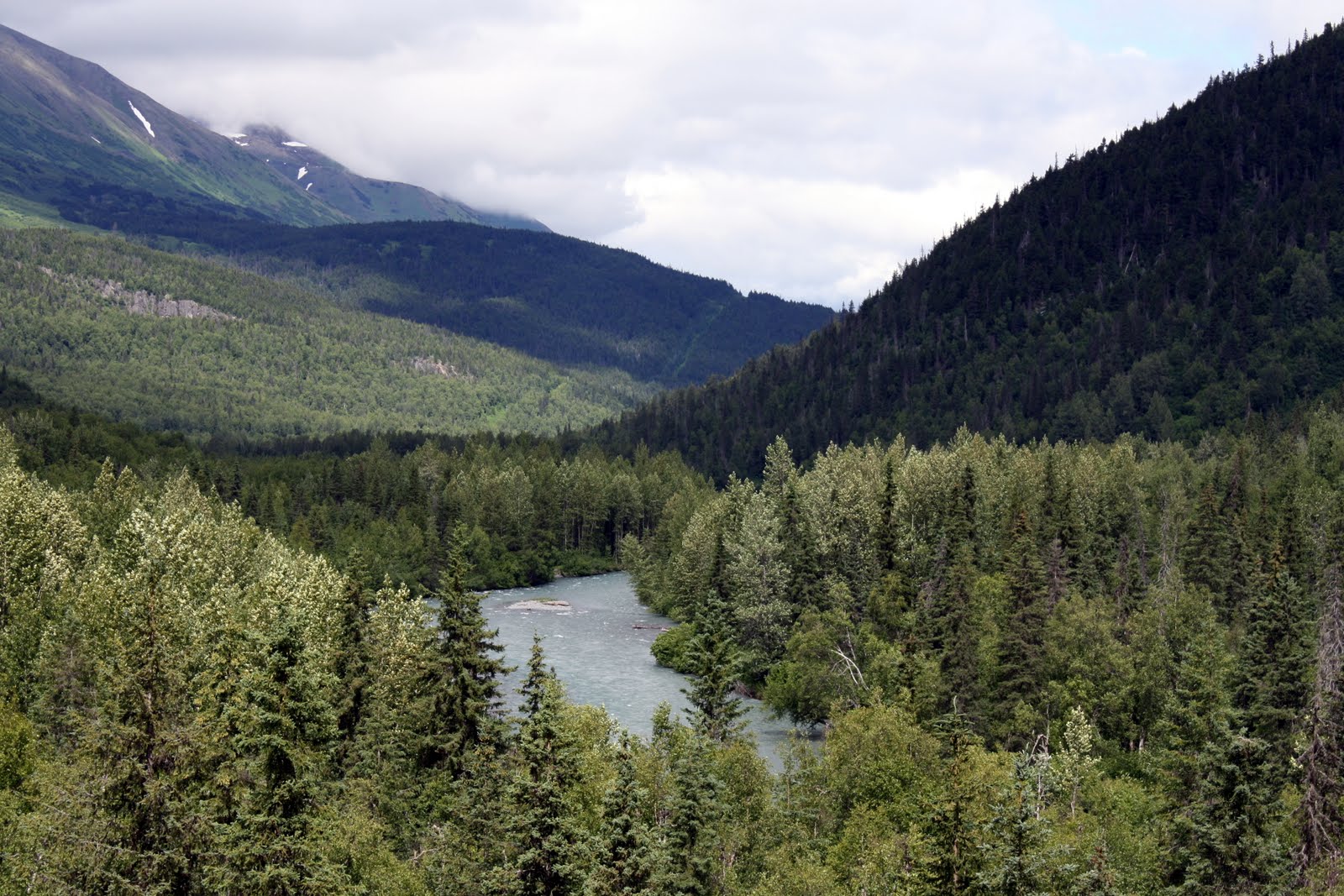
July 8th, on the road to Exit Glacier in Kenai Fjords National Park:


Information signs (and a later talk by a Park Ranger) informed us that glaciers are made of layers and layers of snow that compact under their own weight until most of the air is forced out and the compressed snow turns to ice. Glacial ice can grow to hundreds of feet deep. The pressure of the ice's weight actually melts a thin layer at the bottom of the ice, and the glacier slides on that thin film of water. As it moves, the glacier pushes along all the rocks - and huge boulders - beneath it, scratching striations into the bedrock. The rigid top layer of the glacier also cracks as the glacier moves, resulting in crevasses (many of which are more than 100 feet deep in Exit Glacier). Even though Exit Glacier has been shrinking since it reached its maximum length in 1815, its movement still provides a constant supply of gravel for the Seward area.

Here are a few pictures taken along the trail to Exit Glacier.

Western Columbine:


A type of wintergreen known as Pink Pyrola, which grows from the little round leaves:


The glacier:


Glacial silt and ice, with all rounded edges:


When light penetrates the glacier, all the colors are trapped, except for a beautiful shade of blue.


Striations in the rock caused by the movement of the glacier. As the glacier shrinks, more and more of this rock is exposed.


After the Exit Glacier, we went to the Alaska SeaLife Center on the bay. The center has puffins and other seabirds, a few harbor seals, various fish, a touch-me area with star fish, and a great gift shop. In the front flower bed:


These two little seals were brought to the center as orphaned babies. They spent quite a bit of time with their faces pressed against the floor and wall, and then they dove into the water and started playing.


A large display about 1989's Exxon Valdez oil spill estimates the numbers of animal deaths at 250,000 seabirds; 2600 sea otters; 300 harbor seals; 22 orca whales; and billions of salmon eggs, herring eggs, intertidal plants, and intertidal animals. While in Fairbanks, we watched a program on a Native American station about the spill. An elder testified after the spill about witnessing the deaths of many animals, including a sea otter which gouged its eyes out, trying to clear out the oil.

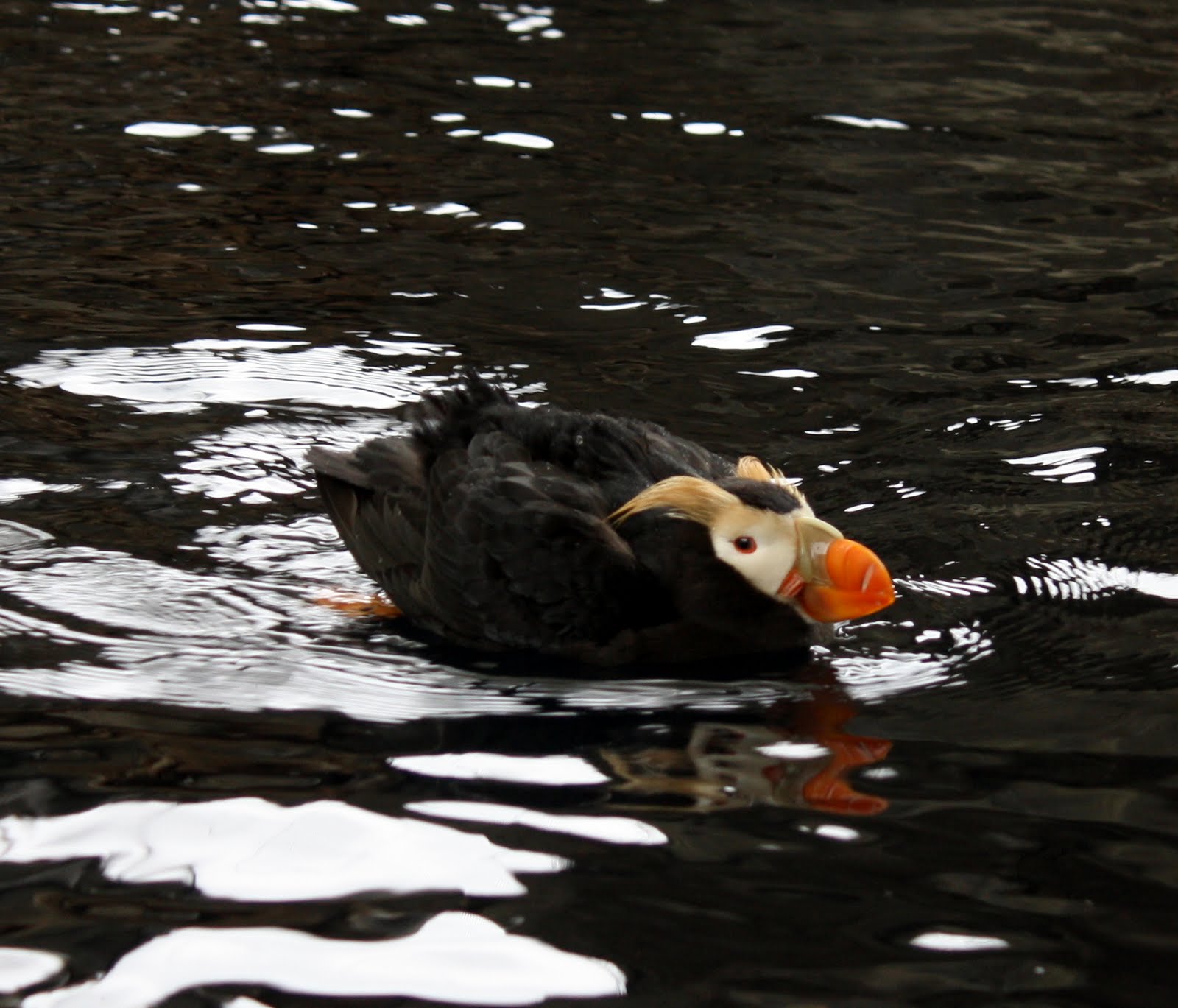
Tufted Puffins, looking a bit like Groucho Marx and sometimes pretending to be turkeys:


Harlequin Duck:


In downtown Seward, an escaped pet rabbit?


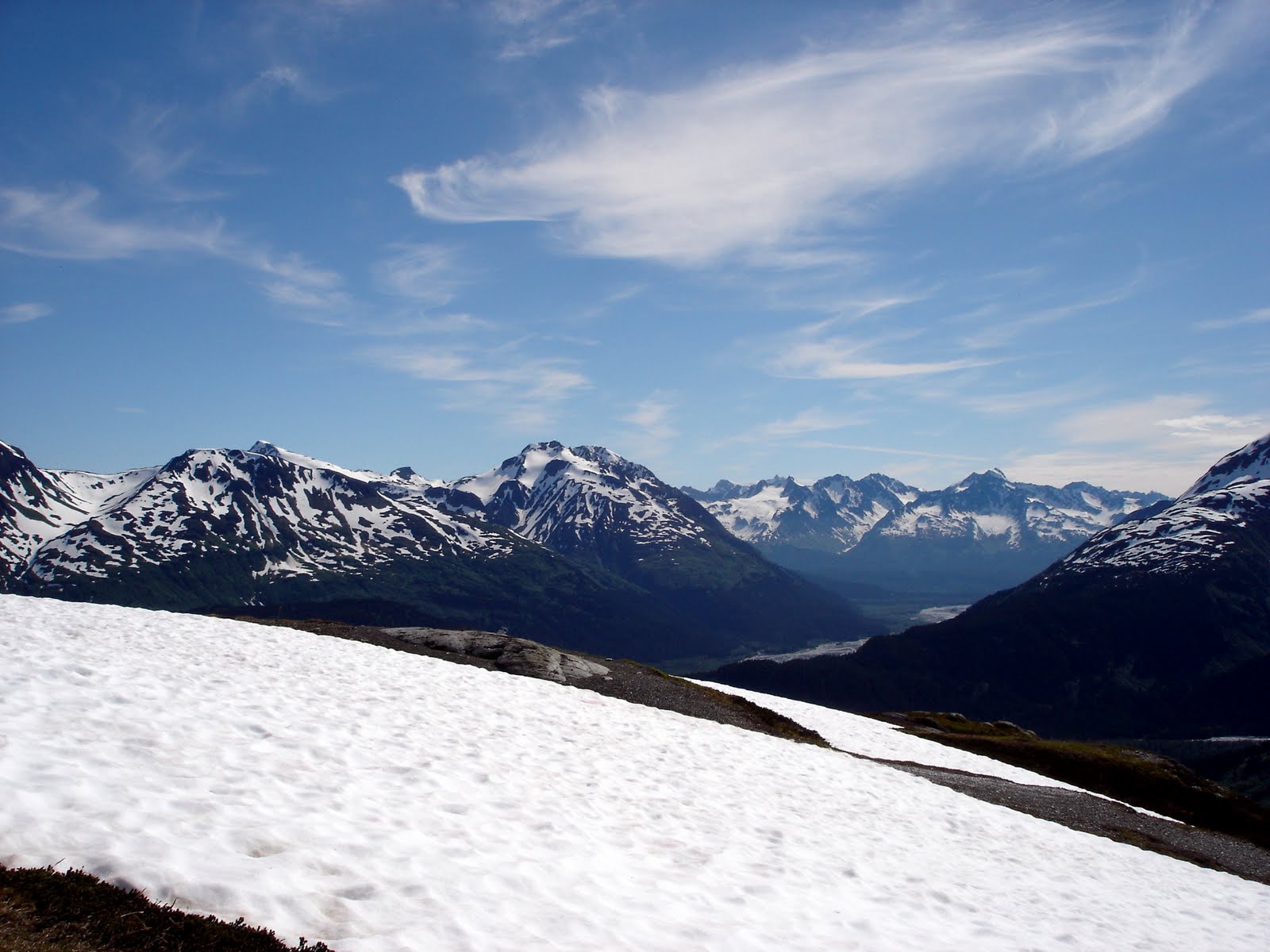
Harding Icefield is the parent of many glaciers in Kenai Fjords National Park. Bill hiked the strenuous 8 miles to the icefield and back on July 8th.


Hoary Marmot:


The trail is steep!


We wish we could remember the Native American term for these peaks sticking up through the ice. It means "Lonely Peaks."