Welcome!

Thank you for visiting The Haley Hiatus, aka Travels with Barkley, where we're tracking our year-long 2010 travel adventure. We'll post pictures and journal entries as we travel the country by a wandering route from Pennsylvania to, ultimately, Alaska and back. If our trip captures your interest, please stop in occasionally to see what we're up to.

Clicking on a photo will make it larger and clearer. For most of the pictures, once the bigger picture comes up, clicking on it again will make it even larger.


Showing posts with label Rivers. Show all posts

Thursday, July 8, 2010

Fairbanks, Alaska Part 1

June 18th, a dreary day with off and on rain, saw us heading north on the Alaska Highway towards Fairbanks.


Robertson River is a beautiful glacial river, which is fed by the Robertson Glacier and runs to the Tanana River. Glacial rivers are called "braided," as they follow various paths (never flowing from bank to bank), depending on the amount of glacial melt, and leave braid-like trails - some dry and some full of water.


The bridge over the Johnson River has five arches.


The Alaska Highway ended in Delta Junction, and we continued north on the Richardson Highway. About 10 miles later, we saw the Alaska Pipeline - looking like a suspension bridge - crossing the Tanana River.


We've seen this cyclist before.


Universal Welding, North Pole, Alaska:


We stayed in Riverview RV Park, between North Pole and Fairbanks, for a week. As good luck would have it, Colin and Betty Linton were in the same park, so Barkley enjoyed some good Colin time.


We were in Fairbanks for the Midnight Sun Festival, a weekend-long celebration of the summer solstice. Persistent rain did not keep folks from going downtown and enjoying the food and music, but it did keep us from being able to take pictures. Fairbanks also celebrates the summer solstice with a night-time baseball game - played without lights - starting at 10:30 p.m. on June 21st and going past midnight into the 22nd. We looked forward to the game, but the stadium was already packed when we arrived at 10:00. So, we went back to the RV park and made a few last-minute changes to accommodate our new traveling companion . . . Maw!

"Maw" is Bill's affectionate name for his mom, Sue, who was planning to join us in California, and then Oregon, and then Washington. Each time, her health kept her from traveling. But, when we arrived in Fairbanks, Bill called her and persuaded her to hop a plane just three days later! Everything went off without a hitch, and we were reunited with Sue in the Fairbanks Airport at 1:45 a.m., June 22nd. An hour or so later, Barkley joined the celebration, laughing with glee and helping Sue unpack.


We are so proud of Sue, the author of Rainy Day People. It's a fantastic novel which combines a wonderful road trip with spirituality, a love of nature, and the growth of a relationship between two people who, like most of us, have been hurt in the past. Check it out here!

June 23d: After a day of relaxation in the RV park, we headed to the University of Alaska Fairbanks and enjoyed the Georgeson Botanical Garden.

Several varieties of columbine:


Students and volunteers:


Tiny groundcover flowers:


These lilacs smelled grassy, with no hint of the classic sweet fragrance we love. One hosted a tiger swallowtail who could fly fairly well, despite wings that have suffered a bit.


Altai honeysuckle:


Various members of the onion family:


Happy pollinators:
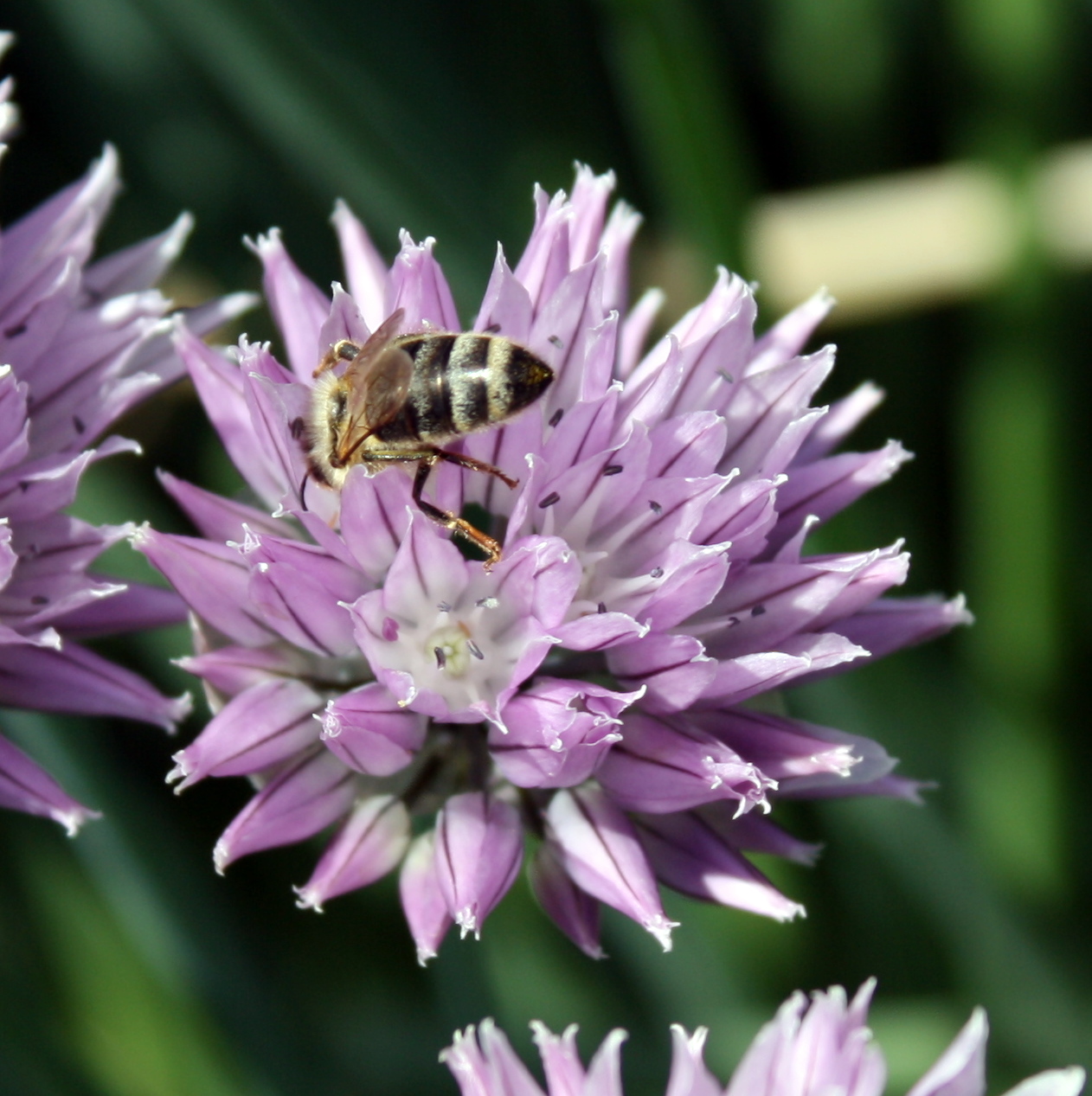


Hives of Carniolan honeybees:


Friday, March 12, 2010

Big Bend


We had heard and read wonderful things about Big Bend National Park in southwestern Texas, so it was one of the must-sees on our trip. By the time we arrived there on Friday, March 5th, we were noticing more than changes in the topography and plant life. We were changing, too! Breathing was a little more difficult, for lack of a better word, as our chests felt heavy - but not the heaviness you might have experienced in very humid conditions. Maybe our lungs were working extra-hard to screen out all the air-borne particals we were breathing in. Regardless, breathing actually felt different.

Our skin was much dryer, too, and felt almost foreign. After being in Big Bend for only a day, our eyes felt gritty, our hands were very dry and had taken on a whitish cast, and we just felt dusty - again, for lack of a better word. It was like we had taken on an extra layer, of dust, which could not be shed. Trying to brush it off, felt like sand on sand. Showers and moisturizer helped, but only for a very short time. Karen's (plastic) eyeglass lenses were sandblasted, resulting in allover fine scratches and a large splotch in the middle. The pads of Barkley's paws got rougher and turned a grayish white. The dry weather, and possibly the sand, seemed to help his toe heal. It was now always dry, and the end of it was finally sealed to the elements. Now wait a minute! Dry . . . sand . . . . We were in the desert! The Chihuahuan Desert, to be precise.

We stayed in the Big Bend RV Resort in Terlingua, about five miles outside the National Park.


Terlingua Ghost Town, about 10 miles outside the National Park, was sort of a hippie town, with pop-art flowers painted here and there, a fun approach to buildings, and nice folks just hanging out and smiling.


Kathy's Kosmic Kowgirl Kafe features heated dining and has great sandwiches!


The Terlingua Cemetery is still used.


Other than the fantastic mesas, the first formation we saw in Big Bend National Park was this one, at the Fossil Bone Exhibit parking area. We thought it looked like a dog's head in profile, but we found no mention of it anywhere.


The bluebonnet (lupine) is the official state flower of Texas. Bluebonnets dotted the sides of some of the park's roads.


We slowly bumped along about 10 miles of Old Maverick Road, with its washboard surface which was so terrible that Barkley wanted to bolt out the window! With 3 miles of Old Maverick to go, we saw a Park Ranger flying along in a pick-up. When Bill matched the ranger's pace, we seemed to glide over much of the road.

The park's Panther Junction Visitor Center is fantastic, with educational exhibits, helpful rangers, and a nice shop. We love the National Audobon Society's field guides, so added two books to our collection. The Field Guide to the Southwestern States covers plants, animals, geology, the night sky, and a few other subjects for Arizona, Nevada, New Mexico, and Utah. The Field Guide to Wildflowers: Western Region provides much more information on many more flowers than the Southwestern guide could, with all the other topics it addresses. Both books have come in handy many times on our trip, as field guides and nighttime reading material!

Luna's Jacal is one of the exhibits on Old Maverick Road. A sign states that "Gilberto Luna raised a large family in this small house called a jacal." The floor of the house is dug into the ground a foot or two.


This is Santa Elena Canyon in the park. Mexico is on the left, the United States is on the right, and the Rio Grande is in the middle.


Tree tobacco on the Santa Elena Canyon Trail:


The end of the trail:


A tight fit on the trail:


Ringtail tracks near the river on the trail:


The view leaving the Santa Elena Canyon. Bill is looking across the Rio Grande at Mexico.


Cerro Castellan:


Bill looking over Tuff Canyon:


March 7th sunset looking across TX-118 from our RV park:

Big Bend, Part 2

From the Rio Grande Overlook on March 8th:


Wildflowers at the Rio Grande Overlook:

This is puncture vine, so named because its spines can puncture a bicycle tire!


The white and lavender flowers are called Velvety Nerisyrenia and are in the mustard family. The yellow is probably threadleaf coreopsis and is definitely some type of aster.


A prickly pear:


Boquillas Canyon, March 8th:


Mexicans cross the river by canoe and on horseback to bring painted walking sticks and beaded items to sell on the Boquillas Canyon Trail. They leave the items with a jar for money and a piece of cardboard with prices written on it. Unfortunately, there was an official sign stating that buying items from individuals illegally entering the country was illegal and any such items would be conviscated if found.


Torrey yucca just beginning to bloom, and one in full bloom:


We couldn't find the name of this pretty little flower. The orchid color was beautiful.


Desert marigold:


Chisos Basin and Mountains, where black bears and mountain lions live. Mountain lions were seen about 20 times from February 1st through March 8th. The basin is at the highest elevation in the park and tracking the change in vegetation was interesting. The desert plants started thinning and trees started appearing. First pines, then oaks. It got much cooler also. We would spend more time in this area if we were ever to come back.


Cholla, possibly whipple cholla, with a few blooms and a nest in the center:


Leaving the Chisos Basin:


We left Terlingua and Big Bend behind on the morning of March 9th. About 60 miles north of Terlingua on TX-118, the terrain had taken an obvious change, and we were stopped by the US Border Patrol to ask if we were US citizens and if we had any illegals hidden in our truck or trailer. There were three officers, and they were very polite. One did the talking and looked in the truck, while the other two went back and checked out the trailer.